NEW TIF PUBLICATIONS | From Everyday Questions to Emergency Care
TIF introduces two novel publications offering accessible information for people living with thalassaemia and practical emergency guidance for healthcare professionals.
Understanding treatment, preparing for appointments and planning for the future are important parts of living with thalassaemia. When urgent health problems arise, healthcare teams also need clear guidance that connects emergency care with specialist expertise.
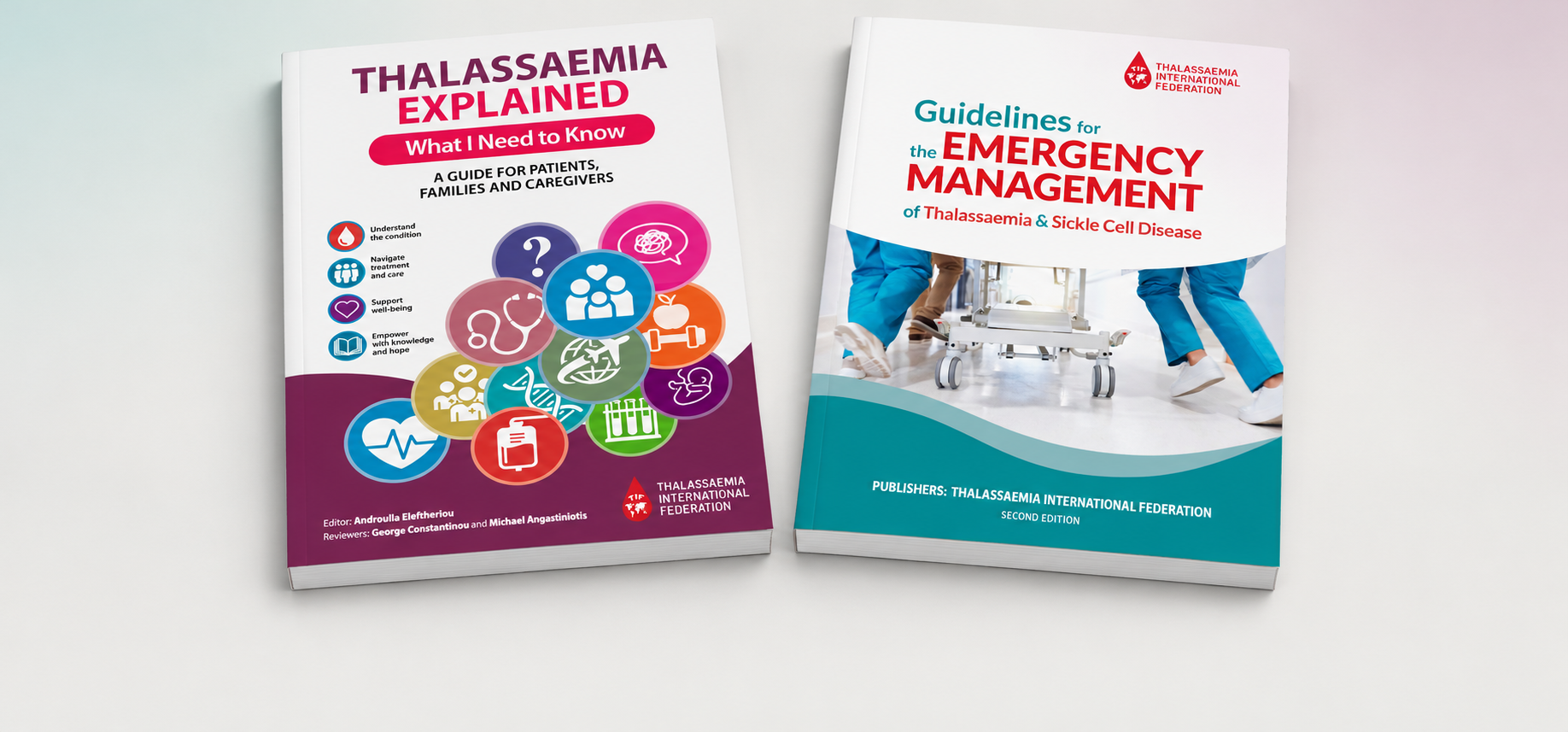
Two TIF publications address these needs from different perspectives: Thalassaemia Explained: What I Need to Know and the 2nd edition of the Guidelines for the Emergency Management of Thalassaemia & Sickle Cell Disease.
Understanding thalassaemia and taking part in care
Thalassaemia Explained: What I Need to Know is designed for patients, families and caregivers seeking clear explanations of the condition, its treatment and its implications for daily life.
Based on TIF’s international clinical guidelines for α- and β-thalassaemia, it guides readers through diagnosis and inheritance, transfusion treatment, iron overload monitoring and chelation, routine health checks, possible complications and evolving treatment options.
Its scope also extends to questions about fertility, pregnancy and family planning, alongside nutrition, everyday activities and mental health. This breadth recognises that understanding thalassaemia involves both medical care and the decisions people make throughout their lives.
With chapter summaries and practical recommendations, the guide offers a resource readers can return to as new questions arise, helping them prepare for conversations and make informed decisions with their healthcare team.
Bringing specialist knowledge into emergency care
For healthcare professionals, TIF’s updated emergency management guidelines provide a structured approach to urgent clinical situations involving thalassaemia and sickle cell disease.
The second edition substantially revises and expands the original 2012 publication, adding sickle cell disease to its scope. It supports the recognition of serious signs and symptoms, appropriate early assessment and investigations, urgent management, and decisions about specialist referral or escalation.
Bringing together international expertise in haematology, emergency medicine and related fields, the guidelines are intended for emergency physicians, nurses, haematologists, paediatricians, trainees and wider healthcare teams.