WARM AUTOIMMUNE HAEMOLYTIC ANAEMIA | FDA Approves First Disease-Specific Treatment
The U.S. Food and Drug Administration (FDA) has approved IMAAVY® (nipocalimab-aahu) for adults and adolescents aged 12 years and older with warm autoimmune haemolytic anaemia (wAIHA) who are currently receiving or have previously received corticosteroids. It is the first treatment specifically approved by the FDA for this rare and potentially life-threatening anaemia.
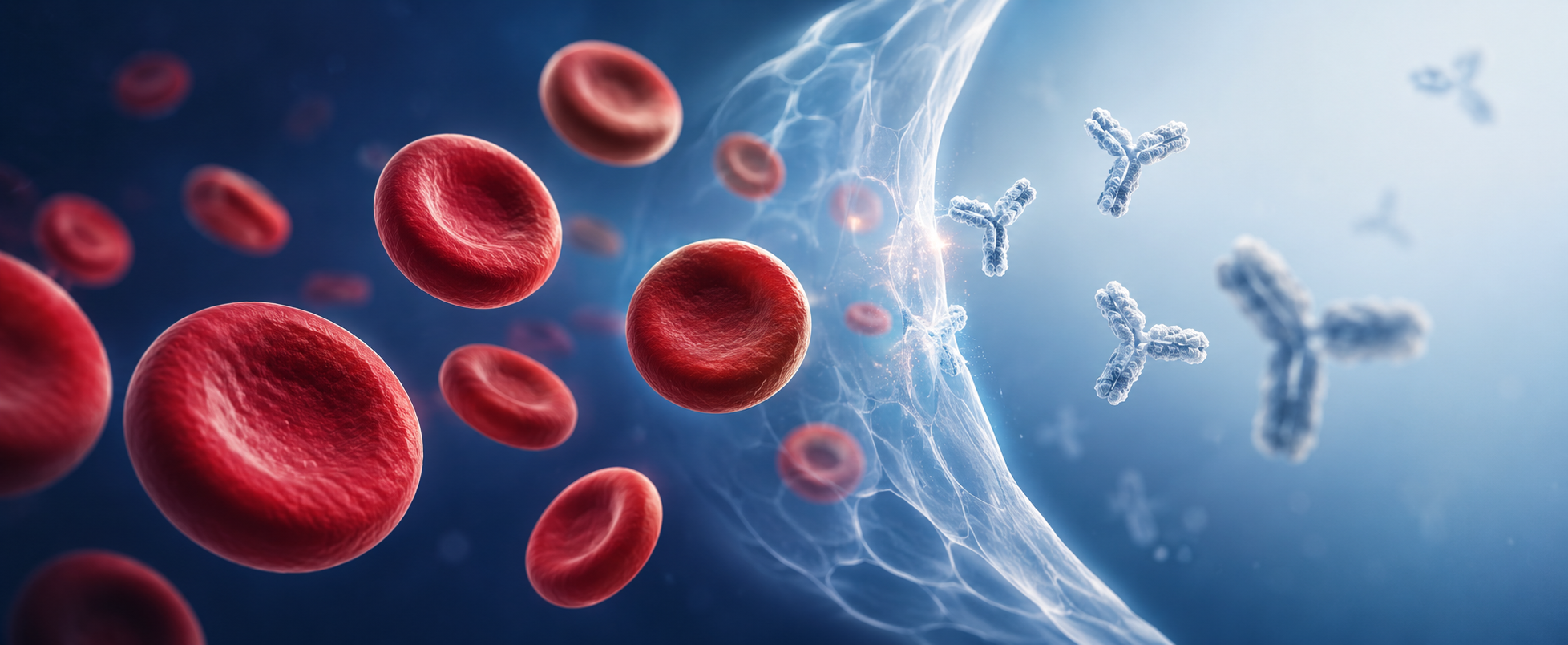
Warm autoimmune haemolytic anaemia is an acquired autoimmune disorder in which immunoglobulin G (IgG) autoantibodies mistakenly attach to red blood cells and mark them for destruction at normal body temperature. Red blood cells are consequently destroyed faster than the bone marrow can replace them, causing anaemia.
The condition can affect people of any age and is estimated to occur in approximately 1–3 people per 100,000 each year. Its manifestations can include profound fatigue, weakness, shortness of breath, dizziness, jaundice and an accelerated heart rate. People with wAIHA may also face serious complications, including blood clots, acute kidney failure, infections, and increased morbidity and mortality.
Until now, treatment in the United States has relied largely on corticosteroids and other immunosuppressive therapies that were not specifically approved for wAIHA. Responses may be incomplete or temporary, while repeated or prolonged exposure to broad immunosuppression can create an additional treatment burden.
IMAAVY is a monoclonal antibody that blocks the neonatal Fc receptor, known as FcRn. This receptor normally protects IgG antibodies from being broken down. By blocking FcRn, nipocalimab accelerates the removal of circulating IgG—including the harmful autoantibodies responsible for red blood cell destruction in wAIHA. The treatment is designed to target an underlying driver of the disease while preserving B-cell function.
The FDA-approved regimen for wAIHA is weight-based. An initial dose of 30 mg/kg is administered by intravenous infusion over at least 30 minutes. A further 30 mg/kg dose is given four weeks later, and treatment then continues every four weeks, with subsequent infusions administered over at least 15 minutes. Patients should be monitored during treatment and for at least 30 minutes after each infusion.
The approval was supported by the Phase 2/3 ENERGY study (NCT04119050), a multicentre, randomised, double-blind and placebo-controlled trial. Participants had lived with wAIHA for at least three months and had haemoglobin below 10 g/dL, evidence of active haemolysis and a positive direct antiglobulin test. Stable background treatments for wAIHA were permitted.
The FDA reported that 118 adults were assigned to receive IMAAVY at 30 mg/kg every four weeks, IMAAVY at 15 mg/kg every two weeks, or placebo during the 24-week double-blind period. The efficacy comparison supporting the approved regimen included 38 people receiving 30 mg/kg every four weeks and 39 receiving placebo.
The study’s principal findings included:
- A durable haemoglobin response was achieved by 23.7% of participants receiving the approved dose, compared with 7.7% receiving placebo—an absolute difference of 16 percentage points. The result met the study’s prespecified threshold for statistical significance.
- Durable response was defined stringently: haemoglobin had to reach at least 10 g/dL and increase by at least 2 g/dL from baseline for three consecutive visits covering at least 28 days, with the criteria first met by Week 16 and without rescue therapy. Participants who discontinued treatment or required rescue therapy were counted as non-responders.
- The 15 mg/kg every-two-weeks regimen did not meet the prespecified statistical threshold compared with placebo and was not the regimen selected for approval.
- Mean haemoglobin increased by approximately 1 g/dL as early as Week 1 in the approved-dose group. Among participants who responded, the median time to the first haemoglobin response was 4.1 weeks, compared with 12.1 weeks in the placebo group. These time-to-response findings were considered descriptive.
- Fatigue was also assessed using the Functional Assessment of Chronic Illness Therapy–Fatigue scale, in which higher scores indicate less fatigue. At Week 24, the adjusted mean improvement with IMAAVY was 3.51 points greater than with placebo (95% confidence interval: 0.64–6.39). Improvements were observed from Week 2, although these findings should be interpreted as supportive or descriptive rather than as the principal basis for approval.
- A numerically greater reduction in corticosteroid use was reported with the approved dose: approximately 15% from baseline by Week 24, compared with approximately 4% with placebo. This secondary finding does not establish that every patient will be able to reduce or stop corticosteroids.
The FDA granted nipocalimab Fast Track, Priority Review and Orphan Drug designations for wAIHA. The authorisation applies to the United States; access in other countries will depend on assessment and approval by the respective national or regional regulatory authorities.
For the Rare Anaemias International Network (RAIN) and the wider rare anaemias community, this decision represents a significant milestone. It introduces the first FDA-approved, disease-specific treatment for wAIHA and validates FcRn inhibition as a therapeutic approach to reducing pathogenic IgG autoantibodies.
At the same time, the findings show that the medicine will not produce the study’s stringent durable response in every patient. Longer-term follow-up, real-world evidence and further research will therefore be important in clarifying durability, safety, optimal patient selection, effects on corticosteroid exposure and the treatment’s place alongside established approaches to wAIHA.
Treatment decisions must be individualised and made in consultation with a specialist haematology team.
Source: Haematology Advisor