NEW WHO GUIDELINES | Strengthening Global Guidance for Paediatric and Adolescent Sickle Cell Disease Care
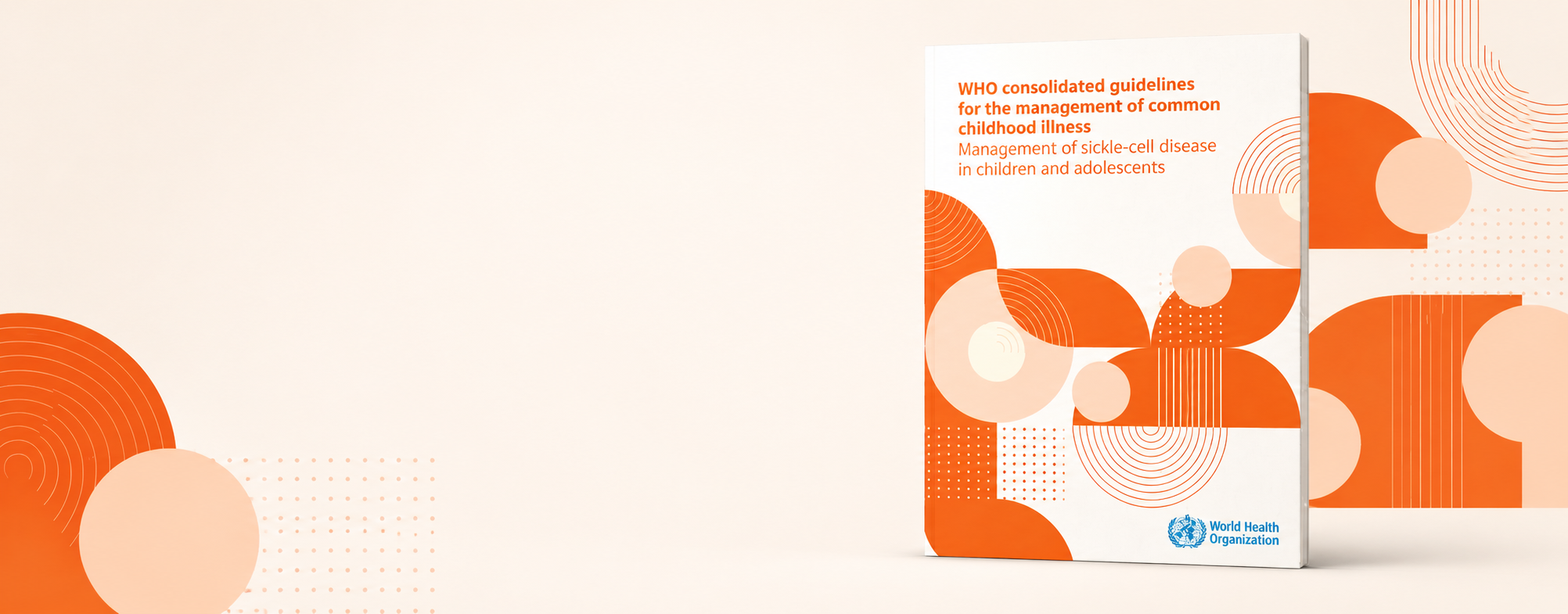
The Thalassaemia International Federation (TIF) welcomes the publication of the new World Health Organization (WHO) consolidated guidelines for the management of common childhood illness: management of sickle cell disease in children and adolescents, issued by WHO in May 2026.
This highly significant publication represents the first WHO normative guideline dedicated to the diagnosis, prevention, and clinical management of sickle-cell disease in children and adolescents aged 0–19 years. It addresses a long-standing gap in global guidance and provides a much-needed clinical and policy tool for improving the quality, consistency, and accessibility of care for young people living with SCD.
Sickle cell disease remains the most common inherited blood disorder worldwide and a leading cause of preventable child death and disability, particularly in low- and middle-income countries. The burden is highest in sub-Saharan Africa, while substantial prevalence is also reported across other historically malaria-endemic regions, including the Eastern Mediterranean Region, the Caribbean, South Asia, and parts of Latin America. WHO also highlights the growing recognition of SCD among diaspora populations in high-income countries.
Developed using WHO standard methods and the GRADE approach, the guideline includes 15 recommendations across seven priority clinical areas. These areas reflect some of the most important components of comprehensive SCD care for children and adolescents, including early diagnosis and identification, infection prevention, disease-modifying therapy, pain management, acute chest syndrome, stroke prevention and management, and screening for SCD-related complications.
More specifically, the guideline addresses:
- Point-of-care diagnosis and early identification, including lateral flow immunoassays and micro-engineered haemoglobin electrophoresis;
- Infection prevention, including penicillin prophylaxis and links to pneumococcal vaccination;
- Disease-modifying therapy with hydroxyurea, a key intervention in modern SCD care;
- Pain management, including the use of nonsteroidal anti-inflammatory drugs (NSAIDs), paracetamol, opioids, and transfusion therapy;
- Acute chest syndrome management, including antibiotics and blood transfusion;
- Stroke prevention and management, including transcranial Doppler screening and exchange transfusion;
- Screening for SCD-related complications, including echocardiography and pulmonary function testing.
The guideline is intended for a broad audience, including policy-makers, programme managers, paediatricians, haematologists, nurses, midwives, primary-care providers, and frontline health workers at all levels of the health system. It is designed to support feasibility, affordability, equity, and contextual adaptation, with explicit attention to implementation in resource-limited settings where the burden of SCD is often highest.
TIF strongly encourages healthcare professionals, health authorities, patient organisations, and all stakeholders involved in haemoglobinopathy care to consult, disseminate, and use this important WHO resource. Its publication marks an important step forward in advancing universal health coverage, reducing preventable child mortality and disability, and promoting better standards of care for children and adolescents living with sickle-cell disease worldwide.