


U.S. Exit from WHO | Implications for Global Health Cooperation and Preparedness
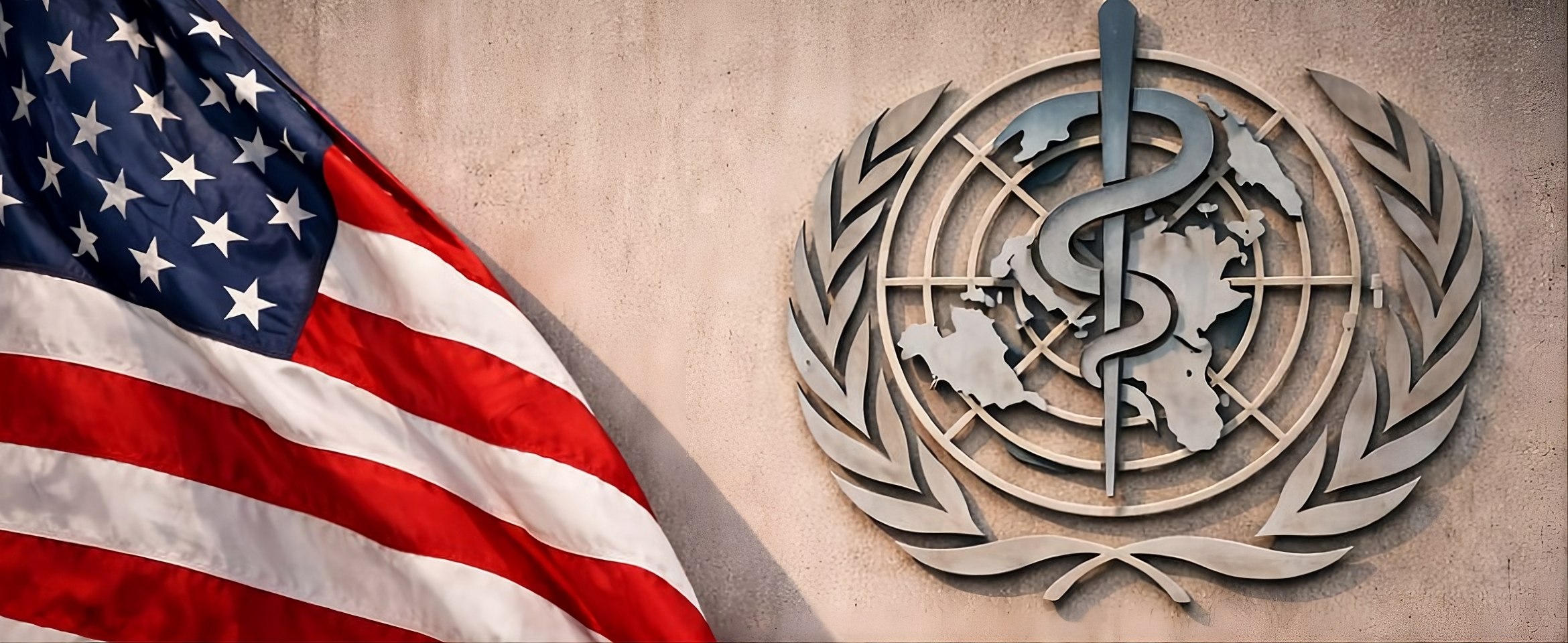
On 22 January 2026, the United States officially ended its membership in the World Health Organization (WHO), bringing to a close a 78-year relationship that began when the organization was founded in 1948. The withdrawal followed an executive order signed in January 2025 by Donald J. Trump, which started the legally required one-year exit process.
The United States had long been WHO’s largest financial contributor, providing both mandatory and voluntary funding that supported many of the organization’s activities. With this funding now halted and U.S. experts no longer participating in WHO committees and technical groups, the organization faces serious budget challenges. Reports indicate that the U.S. still owes approximately $260–$280 million in unpaid contributions from recent years, creating additional financial uncertainty.
The U.S. withdrawal has raised strong concerns among global health experts and international leaders. Many warn that leaving WHO weakens global efforts to detect and respond to disease outbreaks, coordinate emergency responses, and select vaccine strains—processes that rely on international cooperation. Since infectious diseases can spread quickly across borders, critics argue that reduced collaboration could affect both global and U.S. health security.
Experts have also pointed to possible consequences for long-standing international health programs, including efforts to eradicate polio, improve maternal and child health, and monitor influenza and other emerging diseases. Without full participation in WHO systems, U.S. researchers and public health agencies may have limited access to shared data and global research networks that are essential during health emergencies.
WHO leadership has expressed regret over the U.S. decision, stressing that international cooperation is essential to protecting global health. The organization’s Director-General, Tedros Adhanom Ghebreyesus, has emphasized WHO’s role in bringing countries together to respond to shared health threats and promote equitable access to care.
The U.S. exit marks a major change in global health governance. Its long-term impact on international disease control, emergency preparedness, and scientific cooperation remains uncertain. Still, many public health leaders continue to call for stronger global collaboration to address future health challenges effectively.


